|  |  |
Irritable Bowel Syndrome (IBS)
Irritable Bowel Syndrome: Overview

In general, treatments for IBS are directed towards the patient’s main symptoms. There are a wide variety of treatment options. Many improve individual symptoms, but only a small number help with global symptoms of IBS. ACG's guidelines will help you and your doctor make the best decisions for your symptom management. Learn More
Symptoms
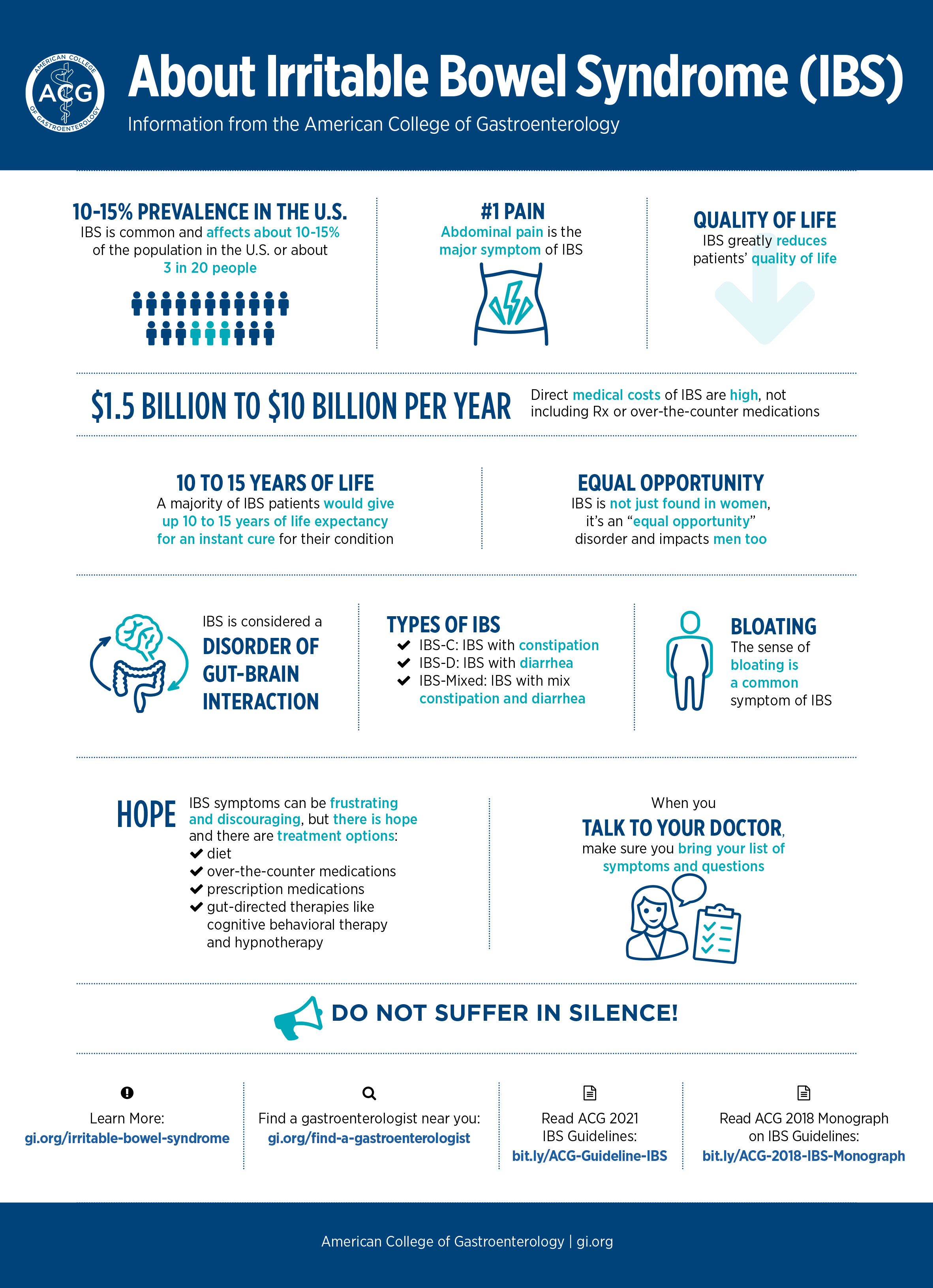
 In the United States, it is thought that 10-15 percent of adults suffer from IBS symptoms. Yet, only 5 to 7 percent of adults have been diagnosed with the disease. IBS is one of the most common disorders seen by doctors. Learn more
 Constipation is a symptom-based disorder defined as difficulty having bowel movements. It is characterized by infrequent stools, difficult stool passage or both.
Learn more
Audio Podcasts: ACG Experts Answer Your Most Common Questions

Abdominal Pain: What You Should Know
Abdominal pain is a frequently reported symptom of IBS. But it is also associated with other health conditions. Dr. Lin Chang addresses common questions and concerns about abdominal pain. She provides insight on symptoms and causes, as well as guidance on treatment options and when to see a doctor. Listen Now

Nausea and Vomiting: When Should You Be Concerned
It is not uncommon for some IBS patients to experience nausea and vomiting, especially when accompanied with abdominal cramping. Dr. Brian Lacy answers common questions about these GI conditions including causes, treatments and when to be concerned. Listen Now
Clinician Resources
- ACG Clinical Guideline: Management of Irritable Bowel Syndrome (The American Journal of Gastroenterology: January 2021, 116(1), 17-44)
- Constipation and Defecation Problems
- Tips for Belly Breathing
- Fecal Incontinence and Chronic Constipation
- Optimizing the Patient-Provider Relationship
Overview
- What is Irritable Bowel Syndrome?
Irritable Bowel Syndrome (IBS) is a disorder of the gut-brain interaction (DGBI).
The gut and the brain are closely connected. They develop from the same tissue before birth, share chemical messengers like serotonin, and are linked by many nerves. Normally, the brain filters out most gut signals. Otherwise, we would feel every movement after every meal!
- What are the symptoms of IBS?
People with IBS may have:
- Abdominal pain that often gets changes after a bowel movement
- Changes in bowel habits:
- Diarrhea (lose stools or going too often)
- Constipation (hard stools, straining or going too little)
- Or switching between the two
- Bloating (feeling of fullness)
Causes
- Why does IBS happen?
IBS is common. It is estimated that almost 10-15% of people in the US have it. There is a lot of research about why it occurs. For most people, there is no single cause.
Possible factors include:
- Genes: Some people are born with genes that affect how quickly food moves through the gut or how sugars are broken down.
- Infections: IBS can start after a gut infection or after taking antibiotics. This can make the gut more sensitive.
- Stress, anxiety, or depression: Emotional stress can worsen abdominal symptoms. At the same time, ongoing abdominal pain can increase anxiety or depression. This vicious cycle is difficult to break.
- Life experiences: Early life stress, trauma, or how someone learned to respond to pain may affect gut sensitivity later in life.
- Gut Changes: In IBS, doctors have found changes in the following can affect the gut.
- How fast the gut moves
- Inflammation
- Gut bacteria (the microbiome)
- Nerves in the gut that become extra sensitive to pain
For most people, IBS is caused by a mix of genes, life stress, environment, and changes in the gut-brain connection.
Treatment
- How is IBS diagnosed?
IBS is diagnosed based on symptoms and by ruling out other conditions.
Your doctor may check for warning signs such as:
- Rectal bleeding
- Unexplained weight loss
- Low iron levels
- New symptoms later in life
- A family history of colon cancer
If these are present, tests like a colonoscopy may be needed.
If there are no warning signs, your doctor may order blood work for celiac disease and inflammation and may also order stool tests.
Most people can be diagnosed with IBS by their history, a physical exam and limited testing. This helps avoid unnecessary tests and allows treatment to start sooner.
There is no single test that proves someone has IBS. This can be frustrating. Normal test results do NOT mean symptoms are “all in your head.” They mean there is no dangerous or life-threatening cause, which is reassuring.
- Can IBS Turn Into Something Worse?
IBS can strongly affect how people feel overall. Pain, bloating, and bowel changes can interfere with work, school, and social life.
The good news is:
- IBS is not life-threatening
- IBS does not shorten life expectancy
- IBS does not increase cancer risk
- IBS does not require surgery
- How Is IBS Treated?
There is no single treatment that works for everyone. IBS is different for each person. It often involved multiple types of treatment used together.
Treatment works best when patients understand why certain medicines work. Some medications that help IBS are specifically for diarrhea or constipation. Other medications treat anxiety or depression and the abnormal gut signals being sent to the brain. This does NOT mean IBS is “all in your head.”
These medicines are usually given at much lower doses than we use for anxiety and depression. The goal is to calm the nerves between the gut and the brain. This helps turn down pain signals and reduces discomfort, bloating, and bowel problems.
These medications help change how nerve messages are sent, which can make the gut less sensitive over time. Treatment can take time, often weeks, to work. Sometimes more than one treatment is needed. This can be frustrating, but many effective options are available.
These treatments are not always lifelong. If symptoms improve, the dose can often be lowered or the medication stopped with your doctor’s guidance.
The goal of treatment is steady improvement and better quality of life.
- What are the treatment options for IBS?
Diet Changes
Some people feel better by changing what they eat, such as:
- Adding soluble fiber (dietary fiber or psyllium)
- Limiting dairy or gluten
- Avoiding sugar substitutes in diet foods and drinks
- Trying a low-FODMAP diet
FODMAPs are types of sugars that can cause bloating and pain. A dietitian is often helpful when trying these diets since they can be overwhelming, complicated, limiting and frustrating.
Lifestyle Changes
Healthy habits can improve IBS symptoms:
- Regular exercise
- Stress management
- Good sleep
- Good Hydration
Techniques such as deep breathing, meditation, yoga, mindfulness, and acupuncture may help. Seeing a therapist or psychologist can also be helpful for managing stress and symptoms.
Medications
Different medications help different symptoms: For pain and cramping
- Antispasmodics like hyoscyamine or bentyl (used as needed after meals)
- Peppermint oil (safe and effective for many people)
- Iberogast (an herbal option)
- Medications that improve constipation and reduce pain and bloating:
- Lubiprostone
- Linaclotide
- Plecanatide
- Tegaserod
- Tenapanor
- Loperamide
- Other medications that reduce diarrhea and pain:
- Rifaximin
- Alosetron
- Eluxadoline
Neuromodulator Medications
Some medications also used for anxiety or depression can reduce gut pain by calming nerve signals between the gut and brain. These are among the best-studied treatments for IBS pain.
They take time to work and may cause side effects at first, but side effects often improve. The dose may be started very low and increased over time to give better relief with less side effects.
Examples include:
- Amitriptyline or nortriptyline
- Imipramine or desipramine
- Duloxetine
- Venlafaxine
Gut-Focused Therapy
Therapies that target the gut-brain connection can be very effective:
- Cognitive behavioral therapy (CBT): Helps retrain the brain to respond differently to gut signals
- Gut-directed hypnotherapy: Uses relaxation and imagery to reduce pain
- Virtual reality therapy: An emerging tool being studied for pain control
The number of options teaching these techniques virtually is continuing to grow. Skills learned in these activities can be used daily to help patients regain control over their symptoms.
Author(s) and Publication Date(s)
Elizabeth Huebner, MD, FACG, Washington University School of Medicine, St. Louis, MO – Updated January 2022
Nimrod Deiss-Yehiely, MD, University of Chicago, Chicago, IL and Victoria Howard, PA, University of Rochester, Rochester, NY – Updated February 2026
GastroGirl Podcast with Jacqueline Gaulin
AJG Podcasts with the Editors
Audio Podcasts: ACG Experts Answer Your Most Common Questions
Abdominal Pain: What You Should Know
Abdominal pain is a frequently reported symptom of IBS. But it is also associated with other health conditions. Dr. Lin Chang addresses common questions and concerns about abdominal pain. She provides insight on symptoms and causes, as well as guidance on treatment options and when to see a doctor. Listen Now
Nausea and Vomiting: When Should You Be Concerned
It is not uncommon for some IBS patients to experience nausea and vomiting, especially when accompanied with abdominal cramping. Dr. Brian Lacy answers common questions about these GI conditions including causes, treatments and when to be concerned. Listen Now